Hidden in the Archives Research
Mini Book to be published soon, by Auckland Museum
Heirloom textiles By Anna Deacon, Research Associate & Jane Groufsky curator, Social & Human history at Tāmaki Paenga Hira Auckland War Memorial Museum
Charles Samuel Milward – Auckland Museum Waistcoat T434
Exquisite 1799 portraits by John Russell R.A. of Charles and his wife Susannah are at AUCKLAND ART GALLERY
Their location and connection to the Auckland Museum collection was discovered as a result of my research
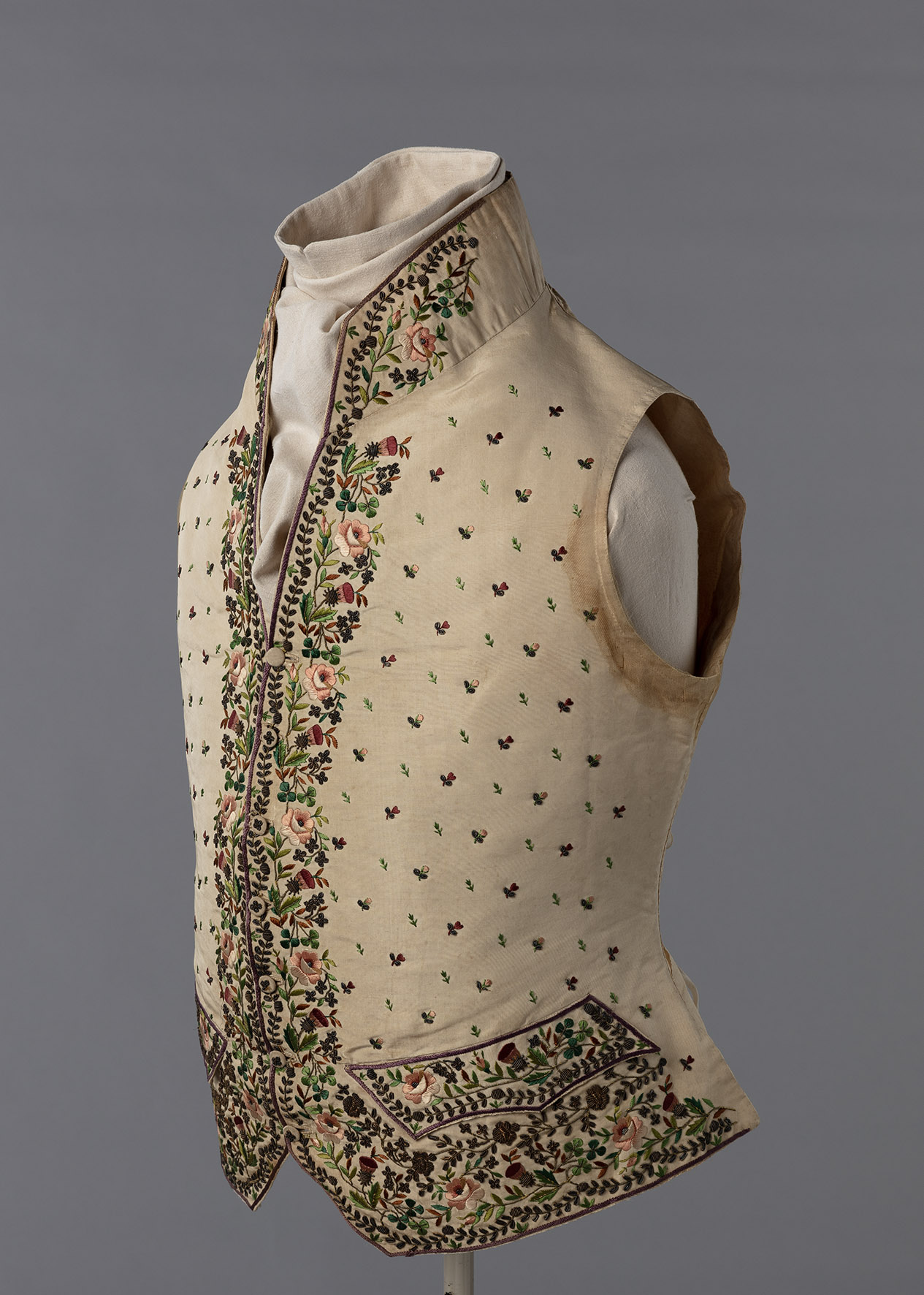
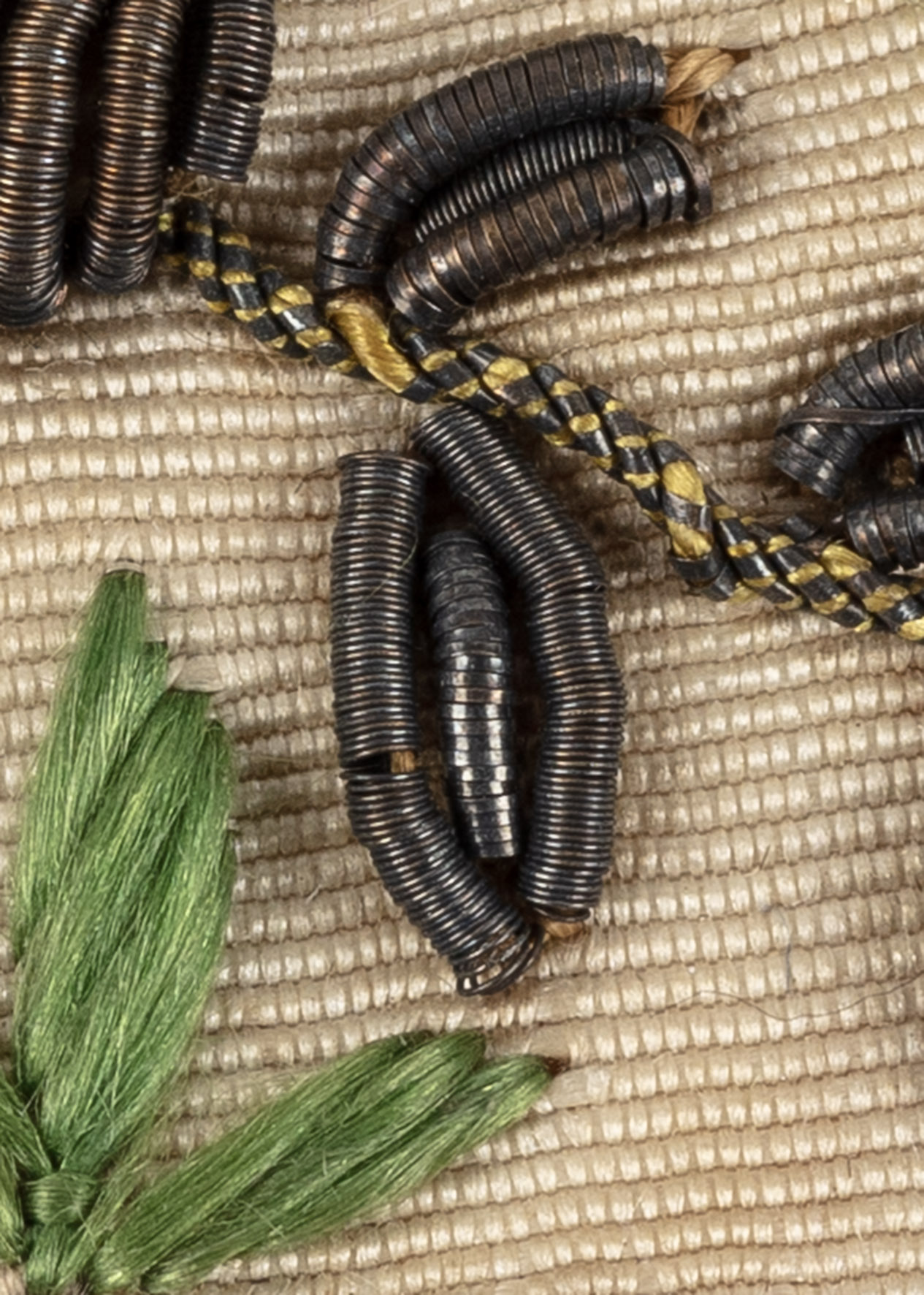
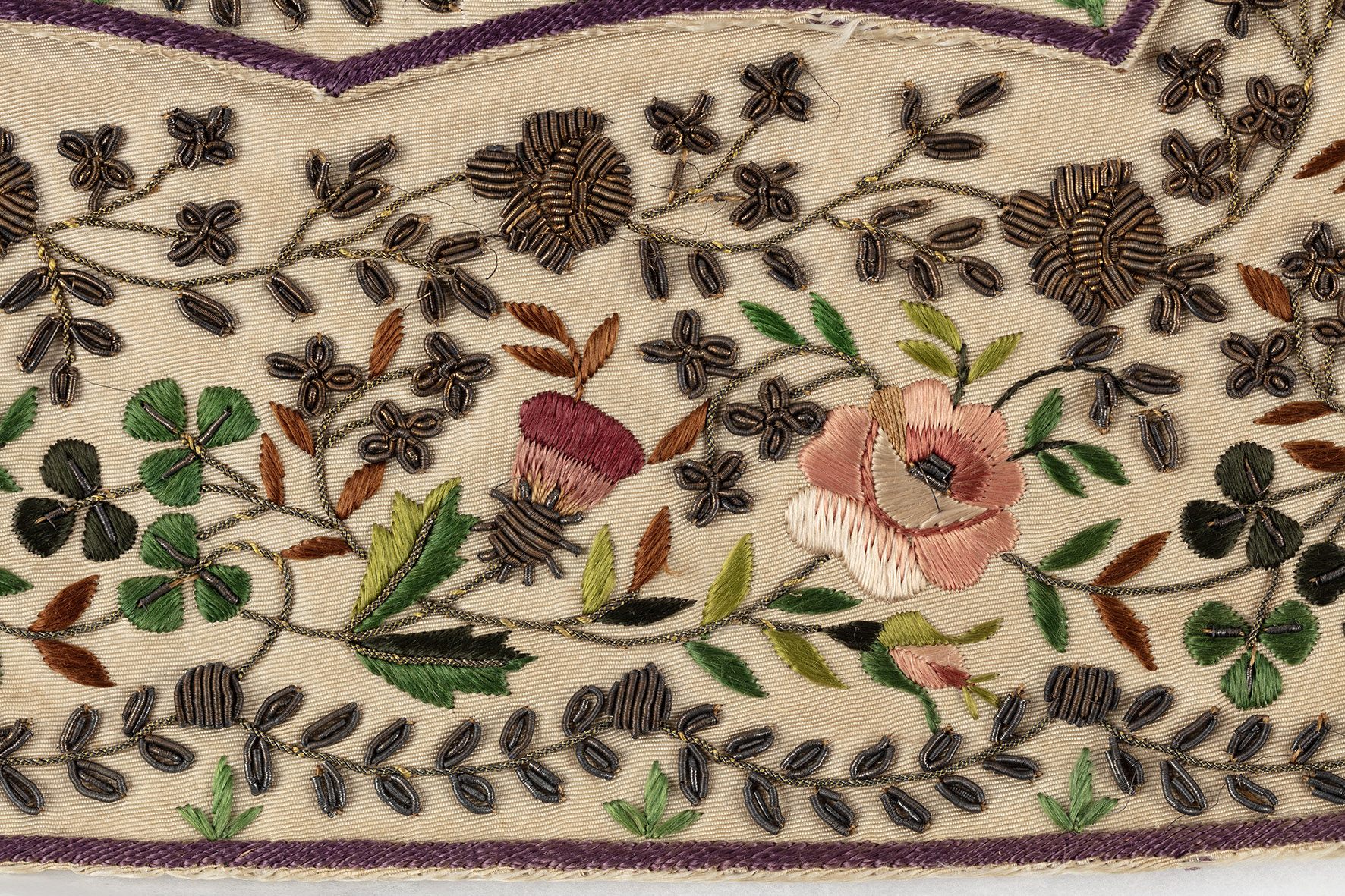
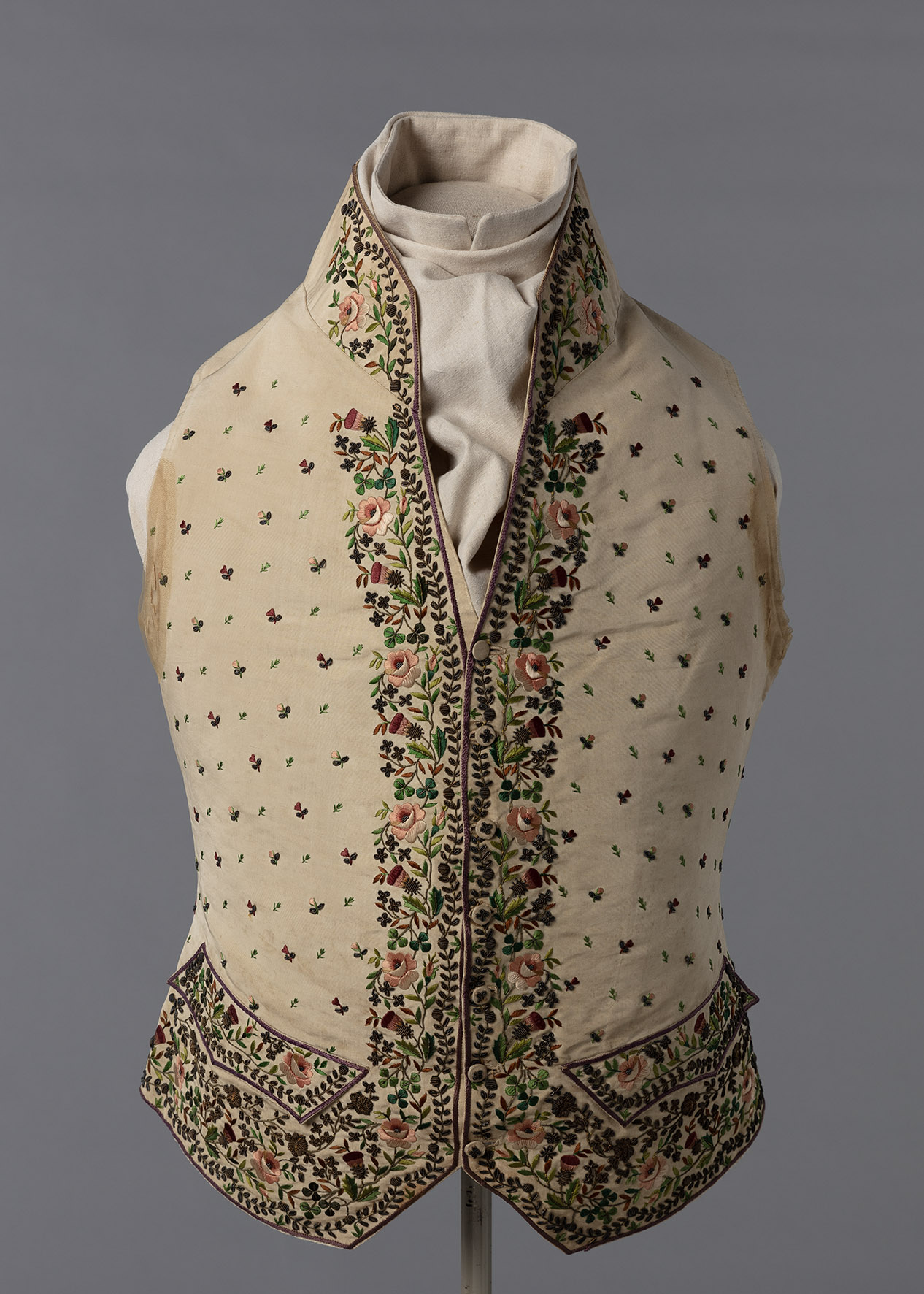
Precise Documentation of Embroidery Placement and Assessing Accuracy of Symmetry
The Milward waistcoat was one of the very first artefacts studied within the Heirlooms collection.
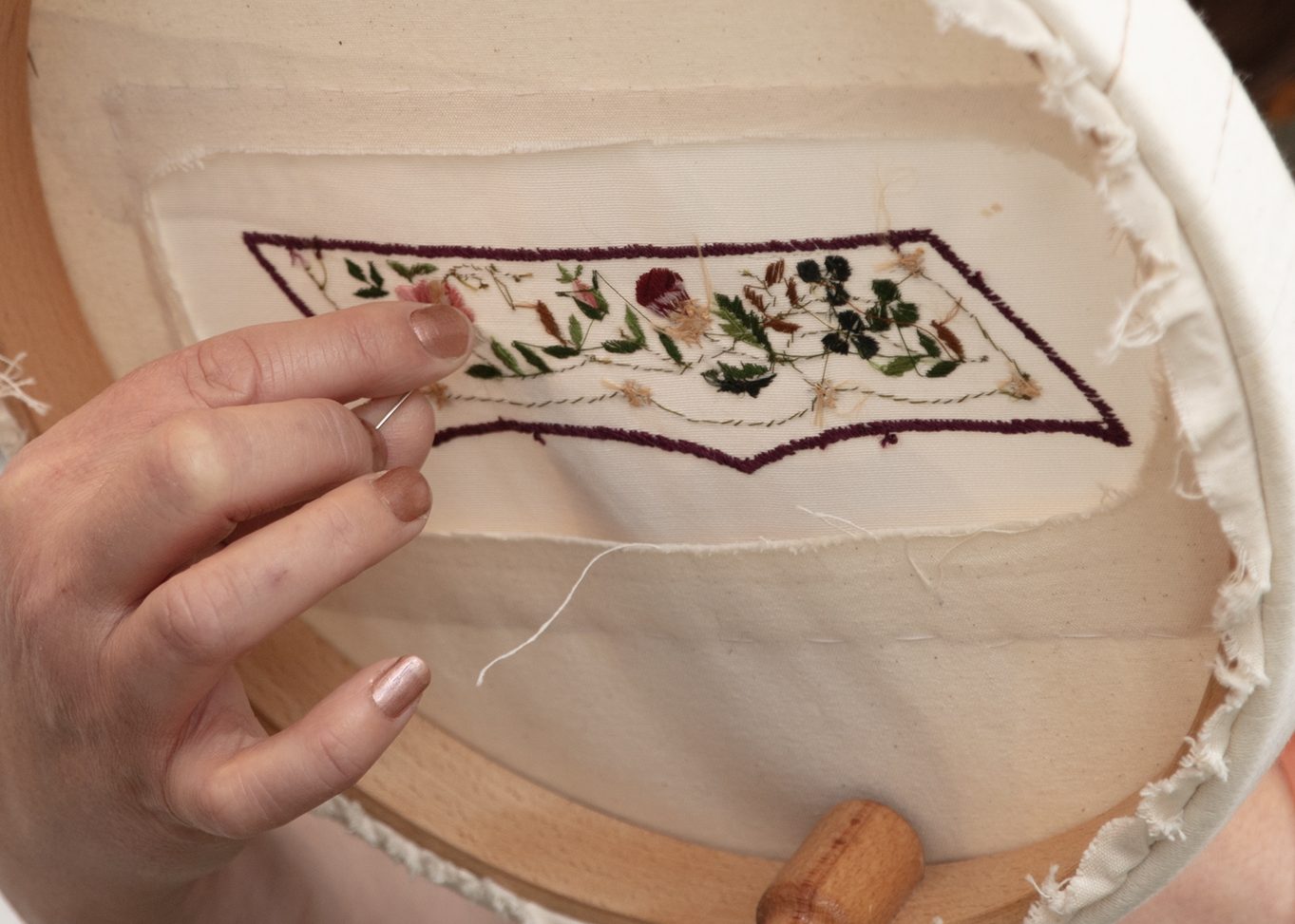
Even an experienced maker with informed historical garment knowledge cannot intrinsically know how the original artisan made a centuries-old garment. However, close observation reveals details of the original construction that can be recorded, though only through experimental reconstruction can an understanding of tacit knowledge be ascertained. When researching this way, rather than creating something with its own unique evolution, the real challenge is to match what has been done before, aesthetically matching the original.
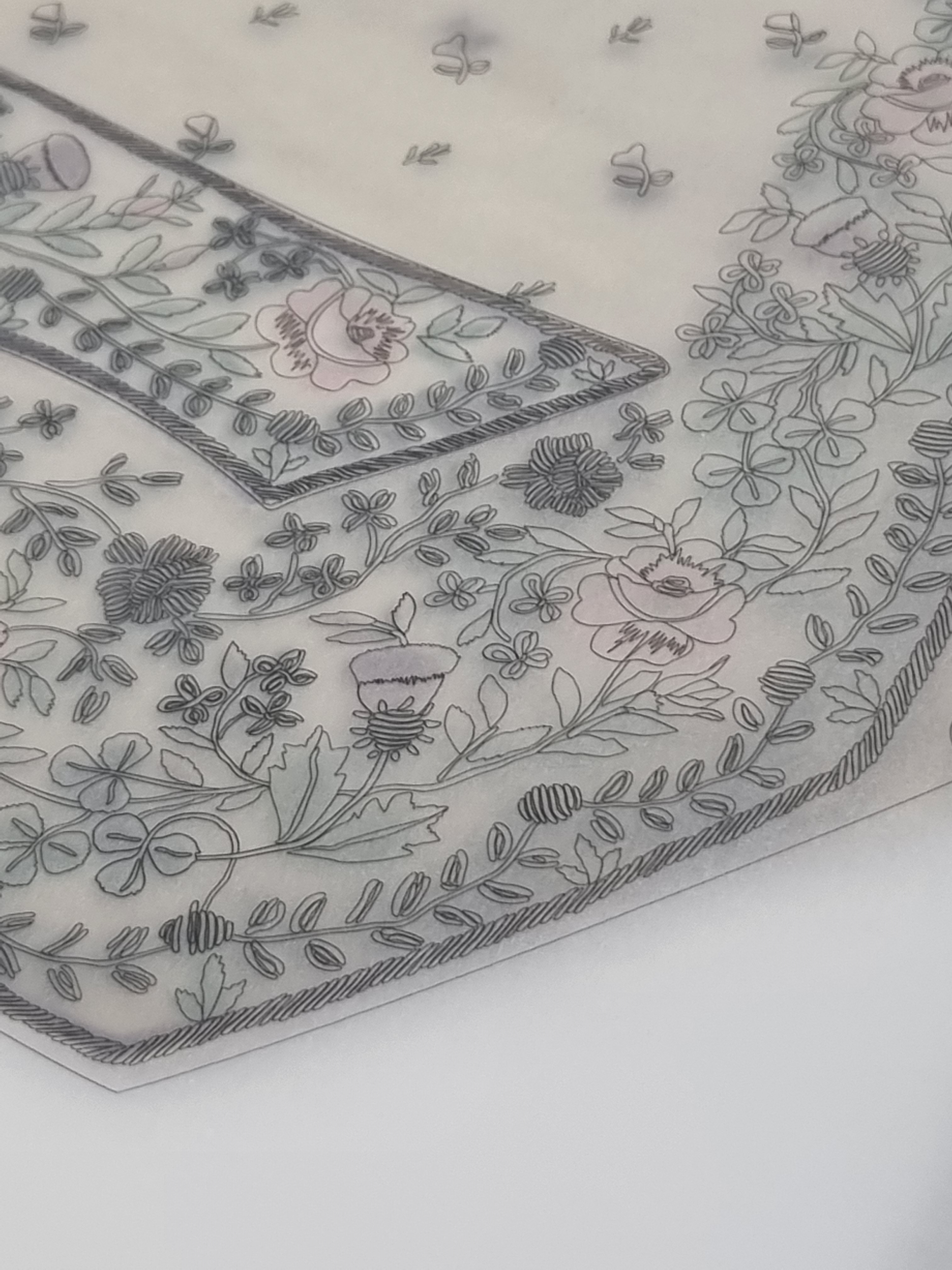
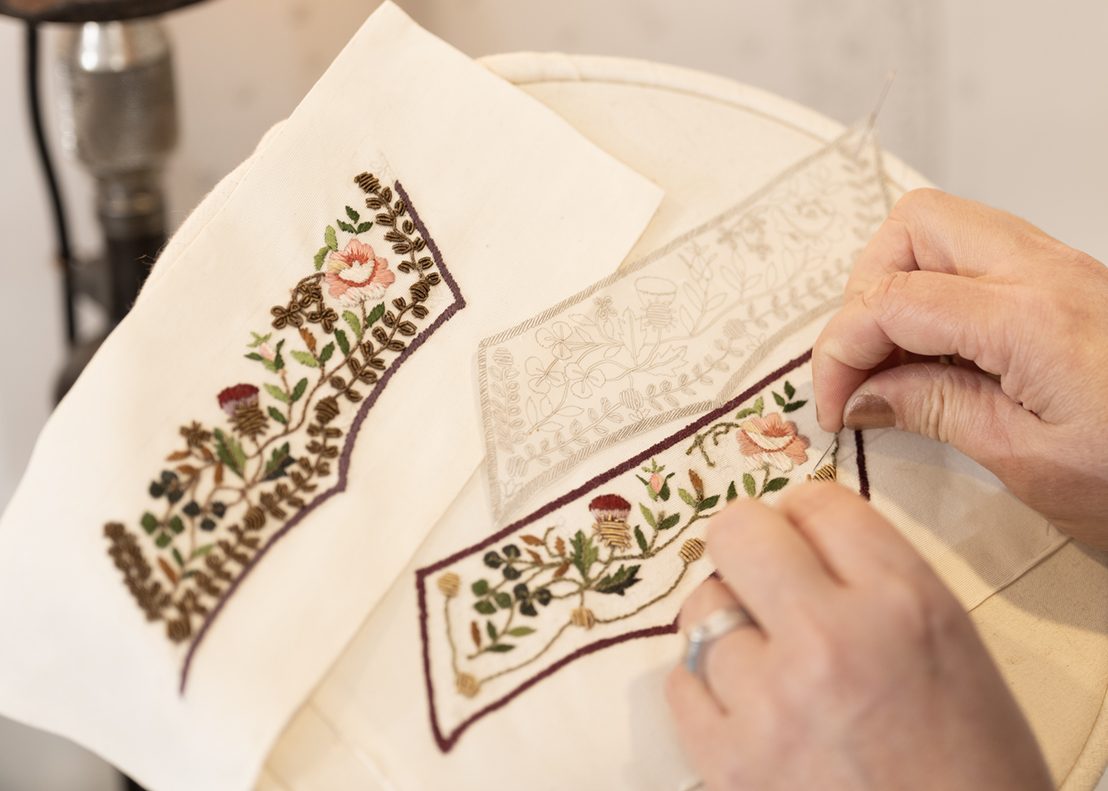
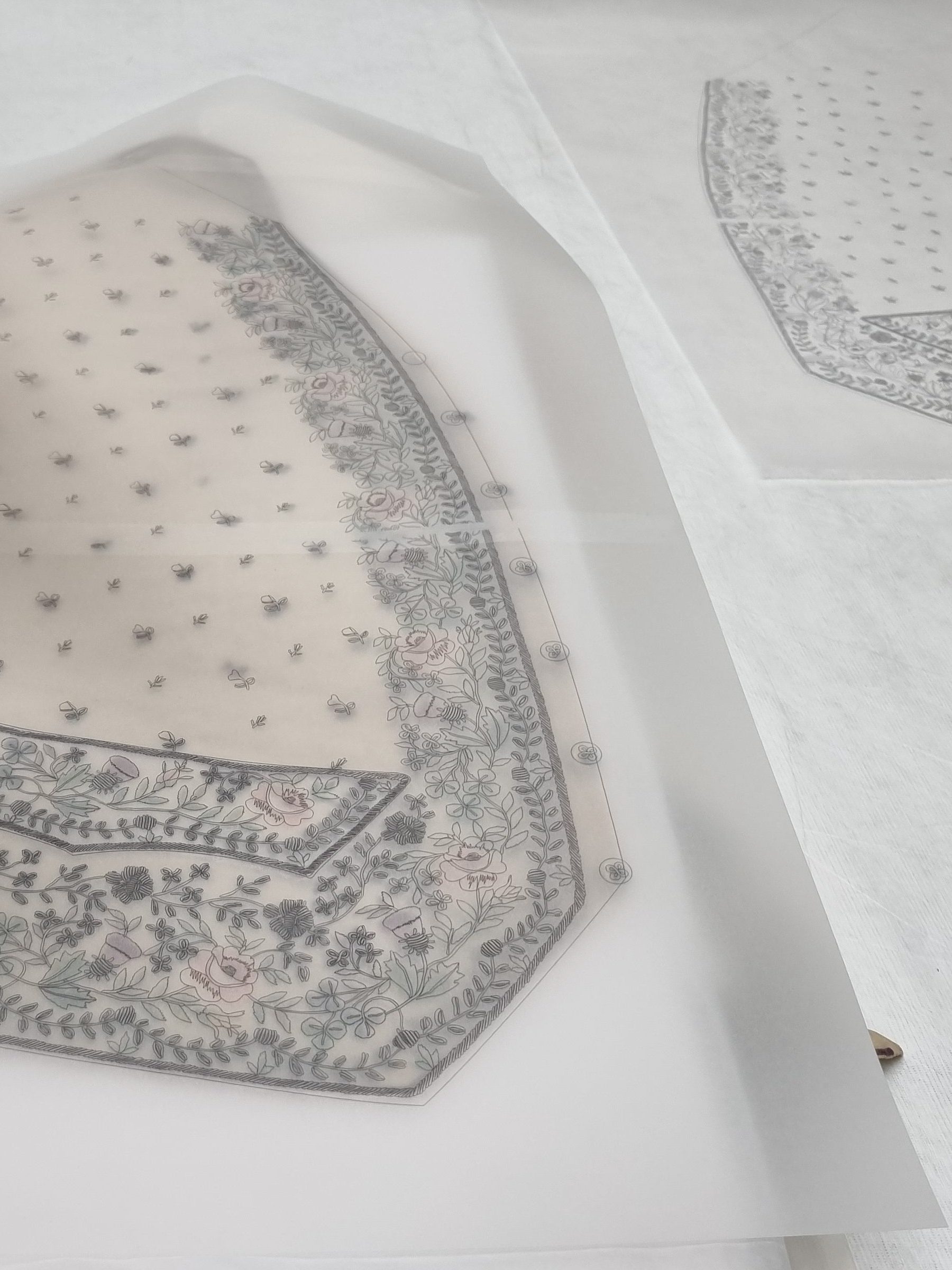
Due to the suit’s plain weave, the traditional technique of systematic measuring needed to be applied to record and draft the garment pattern. This process was more straightforward, with the garments being flat panels and smaller, and also served as a control methodology to compare with the process I was developing with the McCall dress. The waistcoat, however, offered the opportunity to explore a hybrid of the two pattern drafting processes, the traditional method for the basic shape combined with my process, which examined the accuracy of the repetitive embroidery design and placement. Working on the panel shapes in Adobe Illustrator, the embroidery layout was recreated by combining measurement positions of the design elements and placing relevant photographic imagery to scale for reference; then, attentive, laborious documentation was undertaken recording every stitch detail. This highlighted subtle variances within the design and the areas of damage. Though the mirrored left and right fronts visually look the same, they have some distinct minor discrepancies; the accuracy is a true testimony to the silk workers of the 18th century.
Using this transcribed line version of the embroidery design I now had, I experimented with transferring it onto fabric, comparing the accuracy of the 18th-century method of ‘prick and pounce’ versus the more innovative modern-day application of screen printing and digital printing to create the guidelines for embroidering, a technique often employed in film costumes to achieve accurate repeats. Though the method of rubbing ground charcoal and cuttlefish (nowadays talcum powder) through small, perforated holes in the paper design, outlining the design, which then requires the dots to be connected, is an age-old established method, it is time-consuming and messy, with potential for errors. The delicate fine-line printed versions are the favourable option for a highly accurate reconstruction, though technically, they are not a historical methodology reconstruction. This raises an interesting ethical question regarding processes employed to achieve reconstruction piece.
By request via email to anna@annadeacon.com a 100% paper or firm tracing pattern and embroidery lays, which can be either folded or rolled upon request, can be purchased, with a unique, password-protected QR code to link to detailed original artefact photographs, research and construction details. Providing detailed information in this way allows for the most explicit presentation, with the ability to zoom into images and provide hyper-links to other resources. Additionally the service of pattern grading can be undertaken, also reproduction private commissions, price upon request.
This QR system has also been applied to my website, http://www.annadeaconcouture.com, for research links for all of the other Hidden in the Archives research artefacts.
 Anna Deacon Couture